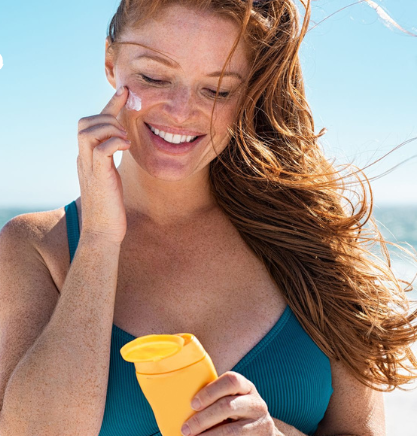
Powder sunscreen offers a convenient way to reapply SPF during the day — especially over makeup or on oily skin.
In this guide, we compare mineral powder sunscreens available on Amazon in 2026 based on:
- Zinc oxide content
- Finish (matte vs natural)
- Brush design
- Reapplication practicality
- Skin-type suitability
Powder sunscreen is best used as a reapplication tool layered over a traditional mineral sunscreen.
If you’re still choosing your primary daily SPF, start with our foundational guide:
👉 Best Mineral Sunscreen for Face Protection
🔥 Comparison Table (With Zinc %)
| Product | SPF | Zinc Oxide % | Best For | Skin Type | Finish |
|---|---|---|---|---|---|
| Colorescience Sunforgettable Brush-On | SPF 50 | ~22.5% | Makeup reapplication | All skin types | Natural matte |
| Brush On Block Translucent | SPF 30 | ~15% | Travel / everyday touch-ups | Normal to oily | Matte |
| ISDIN Mineral Brush | SPF 50 | ~25% | Sensitive skin | Sensitive | Lightweight natural |
| Derma-E Sun Protection Powder | SPF 30 | ~14% | Budget oil control | Oily / combo | Light matte |
Important: Zinc oxide percentages can vary between brands and product reformulations. We strive to reflect current formulation data, but we recommend checking the product label on Amazon before purchasing to confirm the exact zinc oxide content and SPF claims.
This ensures you’re choosing a powder sunscreen that meets your protection needs.
Powder sunscreens rely entirely on mineral actives like zinc oxide for UV protection. Higher zinc percentages generally indicate stronger UV filtering capacity, but proper application thickness remains critical for full SPF performance.
How to Find Zinc Percentage on Amazon:
- Scroll to the “Product Information” or “Ingredients” section.
- Look for “Zinc Oxide” followed by a %.
- Avoid products that do not list an exact % — those are harder to evaluate.
Where to Check Availability
You can review current pricing and availability on Amazon:
- 👉 Colorescience Sunforgettable Brush-On SPF 50
- 👉 Brush On Block Translucent SPF 30
- 👉 ISDIN Mineral Brush SPF 50
- 👉 Derma-E Sun Protection Powder SPF 30
Why Powder Sunscreen Is Different
Unlike lotion mineral sunscreens, powder SPF:
- Is primarily designed for reapplication
- Helps reduce shine
- Works well over the foundation
- Is convenient for on-the-go use
However, powder sunscreen should not replace your primary base sunscreen. It works best layered over a traditional mineral sunscreen.
For oily skin layering strategies, see:
👉 Best Mineral Sunscreen for Oily Skin (2026 Guide)
Best Overall: Colorescience Sunforgettable Brush-On SPF 50
Why we like it:
High SPF 50 protection with zinc oxide and easy brush application. One of the most established powder sunscreen formats.
Best for:
Makeup reapplication and midday shine control.
Best for Travel & Simplicity: Brush On Block SPF 30
Why we like it:
Compact design, simple ingredients, easy for bags, and quick reapplication.
Best for:
Travel, gym bags, and minimal makeup days.
Best for Sensitive Skin: ISDIN Mineral Brush SPF 50
Why we like it:
High SPF with a lightweight feel and a gentle mineral formulation.
Best Budget Pick: Derma-E SPF 30 Powder
Why we like it:
Lower price point with mineral protection and basic oil control.
Who Should Use Powder Sunscreen?
Powder sunscreen works best for:
- Oily or combination skin
- Reapplication over makeup
- Midday oil control
- Travel convenience
It is not ideal as your only sunscreen layer.
For acne-prone layering strategies:
👉 Our mineral sunscreen recommendations for acne-prone skin
If your skin is reactive or easily irritated, see:
👉 Best Mineral Sunscreen for Sensitive & Extremely Sensitive Skin (2026 Guide)
Frequently Asked Questions About Powder Sunscreen
Is powder sunscreen effective?
Yes — when applied properly and layered over base sunscreen. Coverage must be generous for full protection.
Does powder SPF clog pores?
Mineral powders with zinc oxide are generally non-comedogenic, but results vary by individual.
Can powder sunscreen replace lotion sunscreen?
No. It is best used for reapplication.
If you’re choosing a primary daily sunscreen, start with our complete 👉 Best Mineral Sunscreen for Face (2026 Guide & Comparison).
Final Thoughts
Powder sunscreen is a practical reapplication tool — especially for oily skin or makeup wearers.
For sunscreen comparisons and skin-type recommendations, explore: 👉 Mineral vs Chemical Sunscreen Explained
For a full comparison of top mineral sunscreen formulas for daily wear,
see our👉 Best Mineral Sunscreen for Face (2026 Guide & Comparison).