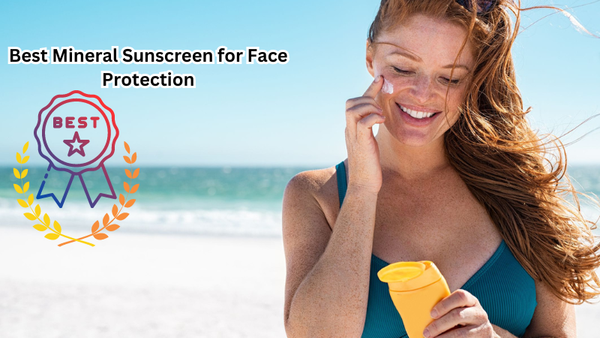
If your sunscreen burns, stings, or triggers redness within minutes, you likely need a mineral formula designed specifically for sensitive or reactive skin.
Mineral sunscreens — particularly those using zinc oxide as the primary active ingredient — sit on the surface of the skin rather than absorbing into it. That makes them significantly better tolerated for people with sensitivity, rosacea-prone skin, or easily irritated skin barriers.
This guide explains:
• What makes a mineral sunscreen safe for sensitive skin
• How to tell if your skin is extremely reactive
• Ingredients to avoid
• When to choose tinted formulas for redness
• How to prevent breakouts while protecting your skin
If you're looking for broader recommendations across all skin types, see our full 👉 Best Mineral Sunscreens for Face Protection (2026 Update).
Extremely Reactive or Rosacea-Prone Skin?
If most sunscreens sting or trigger redness, you may need a stricter shortlist. See our guide to Best Mineral Sunscreen for Extremely Sensitive Skin (Fragrance-Free Picks 2026).
Many people searching for mineral sunscreen for rosacea or mineral sunscreen for reactive skin fall into this category.
For current product recommendations, see our
👉 Best Mineral Sunscreens for Face Protection (2026 Update).
Why Mineral Sunscreen Is Often Better for Sensitive Skin
Mineral sunscreen relies on zinc oxide and titanium dioxide.
These ingredients sit on the skin’s surface rather than absorbing into it, which often reduces the risk of irritation.
Sensitive skin may benefit from:
- Fragrance-free formulas
- Zinc oxide is the primary active ingredient
- Minimal additional preservatives
- Non-comedogenic labeling
For a deeper explanation of how mineral sunscreen works, visit our
👉 Best Mineral Sunscreen for Face Protection
Very Sensitive vs. Extremely Reactive Skin (Including Rosacea)
Some people searching for “extremely sensitive skin sunscreen” are dealing with a more reactive skin barrier than standard sensitive skin.
Sensitive skin may experience occasional redness, stinging, or irritation from certain ingredients.
Extremely sensitive or highly reactive skin tends to react more frequently and more intensely — sometimes even to products labeled for sensitive skin. Triggers may include fragrance, certain preservatives, alcohol, or chemical UV filters.
If your skin is extremely sensitive or highly reactive, look for:
- Zinc oxide as the primary active ingredient
- Fragrance-free formulas
- Minimal ingredient lists
- No added alcohol or essential oils
When in doubt, patch testing new products is especially important for very sensitive or reactive skin types.
Best Mineral Sunscreen for Rosacea-Prone Skin
If you have rosacea or frequent facial flushing, choosing the right mineral sunscreen is especially important. Many chemical UV filters, fragrances, and alcohol-based formulas can trigger redness or burning sensations.
Mineral sunscreens that use zinc oxide as the primary active ingredient are often better tolerated because they sit on the surface of the skin rather than absorbing into it. Look for fragrance-free, alcohol-free, and minimal-ingredient formulas designed specifically for sensitive or reactive skin.
Tinted mineral sunscreens can also be helpful for rosacea-prone skin, as they may reduce the appearance of redness while still providing broad-spectrum protection.
Ingredients Sensitive Skin Should Avoid
Sensitive, reactive, or rosacea-prone skin may experience irritation from the following ingredients:
- Oxybenzone – a chemical UV filter that may trigger stinging in sensitive skin
- Octinoxate – can irritate highly reactive skin barriers
- Added fragrance – one of the most common triggers for redness
- High-alcohol bases – may worsen flushing in rosacea-prone skin
Mineral sunscreens that rely primarily on zinc oxide tend to be better tolerated by sensitive and reactive skin types.
Not everyone reacts the same way, but minimizing potential irritants can help.
How to Tell If Your Skin Is Very or Extremely Sensitive.
Some people experience occasional irritation, while others react to nearly every product.
If your skin:
- Burns within minutes of application
- Reacts to fragrance-free products
- Has rosacea or dermatitis
- Struggles with chemical filters
You may fall into the “very sensitive” or reactive category.
If your skin reacts to almost everything, you may have very or extremely sensitive skin.
In those cases, look for:
- Zinc oxide as the sole active ingredient
- Minimal inactive ingredients
- No essential oils
- No alcohol-heavy bases
For stricter recommendations, see our
👉 Best Mineral Sunscreen for Extremely Sensitive Skin guide.
Common Mistakes With Sensitive Skin
• Using too little sunscreen
• Layering with irritating skincare products
• Switching products too frequently
• Confusing purging with irritation
Consistency matters.
Reapplication for Sensitive Skin
If your skin reacts easily, consider gentle reapplication formats.
Powder sunscreen can be useful for touch-ups.
Explore our
👉 Best Powder Sunscreens on Amazon guide.
Frequently Asked Questions
Is zinc oxide safe for sensitive skin?
Yes. Zinc oxide is generally well-tolerated and is commonly recommended for sensitive, reactive, and rosacea-prone skin because it sits on the surface of the skin rather than absorbing into it.
Can mineral sunscreen cause breakouts?
It can, depending on the formula. Some thicker mineral sunscreens may feel heavy or clog pores, especially on acne-prone skin. Choosing lightweight, non-comedogenic formulas can reduce this risk.
Should people with rosacea use mineral sunscreen?
Yes. Many dermatologists recommend mineral sunscreen for rosacea-prone skin because zinc oxide is less likely to trigger stinging, flushing, or irritation than chemical UV filters.
Final Thoughts
Sensitive skin requires careful ingredient selection — especially with daily sun protection.
For up-to-date mineral sunscreen recommendations suitable for various skin types, visit our - Best Mineral Sunscreens for Face Protection (2026 Update).